
Pushed and Pulled

push pull

push pull*

This post started as a reaction to some posts I saw on Twitter going back and forth about compliance with children in school. My initial reaction is that we all have to learn compliance at some point in our lives, and that as adults we are often expected to comply with rules or policies. But should compliance be expected in every corner of a classroom? Absolutely not. Teaching children compliance for the sake of compliance isn’t really productive. Compliance for safety rules- yes. That makes sense. Compliance for “because I said so” doesn’t really fly with me.

While this post sat in my drafts folder, another post was brewing about the push and pull I feel as a teacher and a parent of children in school.  I began feeling that the two draft posts were related.  I sat on both blog posts a little while longer to really give myself some time to process my own thoughts and reactions.

A week later… I’m not any further than I was when I started.

In my draft posts, I wanted to convey the push and pull I feel as a former technology professional developer, a classroom teacher, and a parent of a child in a public K-12 school district. To add to my inner turmoil: I teach in the same district where my youngest child attends school. The next few points are areas where I am really pushing myself to “walk my talk:”

  1. There are only two rules in our classroom: respect each other and respect our equipment/instruments. At the beginning of the school year (and various reminder points throughout the year), I discuss these rules with every single one of my Kindergarten through 5th grade (430+) students. I ask them if they agree with these rules and why. I ask them if we need any other rules. Most of what they suggest falls under “respect each other.” When they discuss as a class, they agree that we don’t need any other rules than those two. They are OUR rules, not MY rules. This is very important. If my students don’t have ownership in their classroom rules, then this becomes “compliance” for the sake of obeying the teacher. Even though I was taught as a child to always obey adults, I believe that kids who take ownership are more respectful of each other and their own rules when they are involved in the decisions. They also understand, through these rules, that they earn respect when they give respect, and that I respect them, too.  In “walking my talk,” I think this is one area where I am doing exactly what I would expect a teacher of my own child to do. Every time I make a decision about classroom rules, I put on my parent hat. As a parent, would I agree with or endorse these classroom rules? Why or why not?
  2. There are a few policies dictated in my daughter’s school with which I vehemently disagree. I have asked my daughter to comply with these rules, even when doing so disables her from using tools she’s found to help her with organization (she is naturally very DIS-organized). This is one area where I really feel pushed and pulled. I pride myself in being a boat-rocker. I don’t believe in sticking with the status quo to play it safe or go along with the “this is how we’ve always done it” mentality. I fear that the lessons I’m teaching my daughter – do what you have to do to stay out of trouble- will result in a backwards step for her in her own life lessons experiences. As a parent, I’m looking for avenues to discuss these issues with the school administrators, as well as with our district’s school board to plead her case, and for those of other students, too. In this situation, I would be wearing my parent hat… but also my educator hat. My biggest dilemma: will I make things worse for her if I rock the boat too hard? Second biggest dilemma: will I make things worse for myself as an employee, since it’s the same district? I doubt the latter, as I do not plan to storm the castle with pitchforks and torches. I’m a passionate person, but I feel like I also know how to approach matters respectfully and with care.
  3. My personal philosophy about teaching with technology is: if technology enhances or extends the learning experience of students, use it. If it complicates or detracts from the learning experience, don’t use it. I try very diligently to mix the learning experiences for my students in high tech, low tech, and no tech learning activities. This is another area where I feel a lot of push and pull. In many professional development opportunities for music educators, there is great pressure to teach in a purist fashion. No technology. Authentic instruments. This can be good. Kids need these experiences, and they need to know that technology isn’t always the best answer. HOWEVER, during these workshops and classes, I sometimes experience some backlash to technology… almost an arrogant stance against ever using technology. That technology somehow corrupts musical education or education in general. I speak up in these situations, especially when research is spouted about how kids don’t know how to perform some simple task without technology anymore.  Of course, I respond that students need many varied experiences, and then bring up points about obsolete skills… do we really need to teach them skills that either are obsolete now or that will be obsolete at some point in their future? As you can probably imagine, this doesn’t always bode very well for me in these workshops. [*side note: the ‘purist’ workshops are not provided by my district. I love that my district provides opportunities for its music teachers to learn together and provide professional development that we propose and often deliver ourselves.]
  4. As educators, I think we too often fight ourselves. I recently read a featured section in ISTE‘s Leading & Learning journal called Blogger’s Beat. The feature writer, Diana Fingal, called out Will Richardson, specifically,  and other non-classroom educators for pontificating about education reform ideals that are not realistic for classroom teachers. Fingal then quoted Lee Kolbert, a technology specialist who recently returned to the classroom, as someone who has struggled with the transition. My first reaction was that Fingal unfairly quoted Richardson and took him out of context somewhat.  Also, I felt that she used a single blog post written by Kolbert to make a point that Kolbert didn’t necessarily intend to support.  Maybe I reacted to what I read because I’m in a similar situation. I spent eight years in technology professional development, and I’m only just starting my second year back in the classroom. I agree with Will Richardson that education needs someone to light a fire under some educators and education policy makers to realize we can’t keep doing the same things we’ve been doing in education for the last 20, 30, 50, 100 years… and for those of you ready to argue that we have made changes, take a look at photos from classrooms in the 1890s compared to the same structure of classrooms today. Take away the computers, TVs, and other electronic equipment, and most classroom designs look EXACTLY THE SAME. On the other hand, I daily have to force myself to plan lessons differently than from what I learned to do in teacher preparation courses. How can I make my lessons more engaging? How is this lesson going to help my students LEARN? How can I help my students learn more independently, collaboratively with each other… and without me leading them every step of the way? It is difficult, it is a struggle, and sometimes it is a very frustrating experience. There are good days when I feel like I’m doing exactly what I preached to teachers in professional development workshops, but more importantly, I’m doing what’s best for my students. There are bad days when I feel like an utter failure. I don’t know where that middle ground is… or if that middle ground is even good enough.

Maybe I’m putting too much pressure on myself, but I always wear that parent hat. I always want to consider my students in the same manner I want my own children to be considered by their teachers.

I’m pushed and I’m pulled.

*[photo credit: cc licensed photo by Robert S. Donovan]

Leadership Is…

stretch
Leadership is stretching yourself and allowing others to grow. It is pushing yourself to continually learn more and step outside of your comfort zone. (cc licensed photo by http://www.flickr.com/photos/mikebaird/2910365807/)

boat

Leadership is not accepting the status quo, and sometimes taking some heat for that. Sometimes, standing up for what is right entails taking risks. (cc licensed photo by http://www.flickr.com/photos/markwoodland/4524170205/)

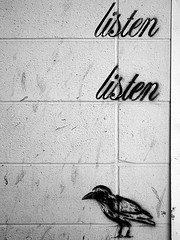
listen
Leadership is not about telling others what to do. It’s  about asking questions, listening, and empowering those around you to take the lead. Great leaders help others move forward. (cc licensed photo http://www.flickr.com/photos/striatic/133146861/)

How have you grown? How have you helped others to grow?

When was the last time you “rocked the boat?”

How are you helping others to take those steps forward?

A Balancing Act

A year ago last January, I wrote a post on “Balanced Connections.” At the time, there were a lot of people talking about how our children don’t spend enough time away from the computer or TV or video games. I’m one that definitely agrees kids need to have some offline time.

Balance

Balance

More recently, my own family has mentioned to me that maybe I’m online too much. There are times when it’s difficult to put down the Blackberry or step away from my laptop, because there are SO many great ideas flowing with people in my network. At times, it’s difficult for my family to understand that I’m working… not just chatting with my friends. I do agree, however, that guidelines must be in place about when it’s appropriate to bury your face in your Blackberry. Dinner time with the family is definitely not that time.

Today, I read an OpEd article in the NY Times, “Tweet Less, Kiss More.” The opinion is that we need to spend more face-to-face time and not bury ourselves too much into technology. I agree. I definitely take time off the grid, so to speak, to read, spend time with the family, and participate in activities that are no-tech or low-tech.

Friday, I caught an episode of House, M.D. right after eating dinner. I don’t watch too many TV shows regularly, but it was on (and I  love Hugh Laurie) and this episode really grabbed my attention early. The short version of the plot: a woman blogs about everything in her life… contracts some mystery ailment, and House and crew have to solve the puzzle to save her life.  While they are contemplating her symptoms, the doctors are scratching their heads, asking themselves why anyone would be so public with their lives- where’s the privacy? Why would you want to blog literally about every activity in your life? Then Peter Jacobson’s character, Dr. Chris Taub makes a statement that privacy is actually not the norm… it’s a relatively  “new” concept. For centuries, people lived in small villages and everyone always knew each other’s business. Privacy is more of a 19th-20th century invention.

At that point, my brain went, “AHA!” He’s right. One of the biggest complaints I hear from people who do not have an online presence is that sharing information about oneself online is an  invasion of privacy and why would we want to share every facet of our lives with people we don’t really know? In the House episode, the patient/blogger maintains that she DOES know the people she communicates with online. Just because she’s never met them in person doesn’t mean they don’t have meaningful relationships. And… I agree with her, too.

How can I agree with the “Tweet Less, Kiss More” writer AND with the blogger in the House episode at the same time?

It has to be about BALANCE.

When we hear people talking about kids needing balance, they are usually referring to more OFFline time. A lot of educators who don’t spend time online are the biggest proponents for kids needing more offline time.

BUT… how many of our educators really have that balance they want for kids? I’m wondering if enough of them actually spend enough time online?? Is there value in having an online presence? Yes. Can you still have a life outside of Twitter and blogs and wikis and Flickr and…  YES. You have to have those guidelines that I mentioned above, but it’s definitely possible.

If you don’t spend enough time online, though, can you achieve the same balance you’re recommending for kids? I don’t think you can.

I Am A Teacher

I am a teacher. By choice. Why? Because I love learning more than little kids love candy… and helping others learn makes me incredibly happy. teach_inspire

Too altruistic? Too sappy? Sorry, but it’s the truth, and it’s been that way since I was in 2nd grade. At the age of 8, I knew I wanted to be a teacher.

(This is another one of those posts I had to start and then put away for a little while. Too much emotion to write rationally. Reader, beware.)

There have been several articles I’ve read recently about education- education reform, how to improve schools, public vs. private vs. charters…. and so many of these articles include a perception of teachers that really scares me. And angers me. And frustrates me.

Perhaps no article I’ve read all year has provoked as many feelings as this one- Saving Oregon Schools: Targeting the wrong areas for budget cuts. Actually, the article on its own was not really the issue- I don’t agree with all the suggestions the author contributes (especially cutting extracurriculars), but the comments attached to that article? Wow. I know that comments sections are not always a true gauge of how people feel. Comments can provide an arena for flame wars to begin– the anonymity allows some people to go a little overboard. Par for the course, right?

Many of the comments to this article attack the Oregon retirement system for educators. There are many who believe teachers should not be allowed to retire with as many benefits as they do. I’m not writing this specific post to argue that point one way or the other. Teaching is a profession, where in most states, you are required to continuous professional development and graduate classes, advanced degrees… essentially life-long learning and full-time service to children throughout your career… but I’m not going to open that topic for this blog post.

Instead, it’s the perception of teachers that pervades many of the comments that has me so upset. If you don’t take the time to read any of them, let me just provide a few excerpts here. I’m not going to list the names of the commenters- feel free to go back here to read them yourself, if you wish.

“If you cannot do, teach! That’s so true. The smartest students in college go for real jobs, and the incapable became teachers. Right now there is an over-supply of new teachers. Why? Because these people were laid off and couldn’t land other jobs! These low-ability people shouldn’t earn this much of my tax money! Cut teachers first before cutting other resources.”

“This has been a problem for far too long and we’ve allowed the tax eaters, that is, teachers unions, to fleece the American public into thinking that more spending, which ultimately ends up in their members’ pockets, somehow equates to better outcomes.”

“I don’t think teachers pay is the issue, it’s the value we receive as a community supporting our public schools. We don’t receive “value” from what we spend our education dollars on. For what we invest in our Public Schools all of our Teachers and Administrators should hold Doctorates, work 20 hour days and graduate 99% of their students, who should easily ace there [sic] SAT Test.”

“I Hate to Say This, But Califonia [sic] found the Answer! The Governor rolled back Salaries to Minimum Wage Levels for all State Employees!!! What a Great Idea!!! In Oregon, that would mean No Lay-Offs and we could fund PERS…. Now That’s a Win, Win, for the State!!! Come on Ted, Let Get With the Program!!!!!!”

I don’t even know how to respond to these comments. I’ve battled the “those who can, do” statement for years, along with people outside of education who think I have my summers “off.” Teaching, apparently, is not a real job.

The teachers I know spend their summers attending more classes, workshops, and conferences to help them grow as teachers and learners- usually all summer. Additionally, they work extra jobs to help pay for tuition, they teach and/or tutor in summer programs, private schools and/or studios. The only time I can remember having a true summer vacation is when I worked in a corporate job and could take two weeks off without any other obligations.

There were several other commenters who railed against teachers’ unions that protect tenure and incompetent teachers. Are the unions really to blame? or is an inadequate evaluation system more the problem? Personally, I know a few teachers who have been dismissed for incompetence. It probably doesn’t happen as often as it should, but it does happen.

I didn’t write this post thinking I would be arguing with these comments. Instead, I had hoped to outline a bigger problem which is the perception of teachers. How do we as educators change the public view of what we do in the classroom?

If we leave it to outsiders, we’re not going to get anywhere. We have to be more proactive. We have to take action ourselves. I’m tired of hearing the negative stories in the media about the bad things happening in school and with kids. I want the media to see me- to see other teachers like me- to learn about all the amazing things happening in our schools!

My action plan is not that complicated:

  1. Contact the media more often. Invite them to my classroom (again). Share, through multiple methods, what it is we’re doing.
  2. Bring parents into the classroom more. The parents in my school are already welcome in my classroom, although not many of them take our offer to visit. I want them to share their expertise in my classroom more often. Side note- I actually have really great and appreciative parents in my school, and for that, I am extremely grateful.
  3. Bring more attention to other teachers and students who are doing great things. Not every teacher has a powerful network where he/she can share successes. I have a great learning network of people who love to share ideas, collaborate, and celebrate with each other.

I am a teacher. By choice. Not because I was incapable of doing anything else, but because I couldn’t imagine doing anything else that would make me as happy as teaching does. I forgot that for a while. I left the classroom for “bigger and better” things. Corporate jobs. Bigger paychecks. More prestige. I was really successful… and really unhappy. Now I’m a teacher again. A really happy teacher who needs to help others see the real reasons why we teach.

What are YOU doing that allows your community to know about great things in your schools?

[Photo credit: Teach & Inspire, taken by Ryan Hyde on April 17, 2010. RLHyde’s Photostream.]

Fly On The Wall

I started to write this post while I was attending ISTE 10, but wanted a little more time to think and reflect before finishing the final draft.

In several sessions, both formal and informal, there was discussion about how to participate in discussions at ISTE. Some people felt compelled to join the discussion instantly. Others hung back and listened. While some stated they were too new to the conference to contribute to a discussion, others noted that they learn a lot by simply listening.  I’m not a shy person, and I always have something to say… so I tend to encourage people to speak up, whether they’re newbies or not.

I have to admit though, that there is definite value in lurking and listening… whether it’s a face-to-face discussion group or an online conversation or chat. Isn’t that something I address often in my classroom? We have two ears and one mouth. Shouldn’t we listen twice as much as we talk?

My new friend, Nicholas Provenzano, aka @thenerdyteacher, brought up this point while we were sitting in the Bloggers’ Cafe at ISTE. He said something about how valuable it would be to become a fly on the wall at every part of the conference. That one reference set off a spark in my brain. For a person who has an opinion about everything, I can safely say it’s difficult for me to listen more than I speak. However, I’ve been trying to lurk more lately. It’s nice to try something different, and I’m definitely learning in a different way.

One thing I tried this year at ISTE that was different than past conferences was to participate in the backchannel in two sessions as an informal moderator. In addition to listening to the presenters, it was also an amazing experience to “listen” to the people in the backchannel. I thought I would be more distracted by others, but I found that I was actually more involved in the sessions.

Wow. This listening thing might become a habit for me.

Message and Delivery

This evening, I found myself stepping outside of what I consider to be my professional demeanor. I sat with a group of people I respect and watched a speaker lose control of what he was saying because of how he presented it. He lost his audience, and his audience did not give him the respect that he deserved because of how he delivered his message.

What can we all learn from this experience?

1) While it may be funny at the time, you’ll regret ridiculing the person and the delivery. At first, it was funny… later, I was embarrassed. Embarrassed for him, and embarrassed for us. We’re all better than that. To be completely honest, I don’t feel better about myself for going along with any of it.

2) If you’re presenting, KNOW YOUR AUDIENCE. You might have the key to saving the world, but if you fail in the delivery… no one will listen. It’s unfortunate, but it’s the human condition. Your responsibility as a presenter is to ensure appropriate communication of your thoughts. When you don’t effectively communicate and are then taken to task for that error, take your lumps and find a better method to share your message.

Maybe more importantly, do your research ahead of time to know your audience well. If a large percentage of those people blog/Tweet/present about “Death by PowerPoint,” perhaps it would be best to find something other than PowerPoint to aid in sharing your information.

We have all probably made similar mistakes in our own presentations somewhere along the road. Did we judge more harshly tonight because of the magnitude of the event? Because the speaker was paid? Because of who we- the audience- are and what we expect? I’m guessing some combination of all of those.

However, what kind of message did WE send with our behavior? I expect to take some lumps for my “delivery” – in this case, it was behavior. I’m not blaming anyone else for how I behaved – what I said, what I sent out through my network. That’s mine, and I have to own it and deal with any repercussions.

That little voice that’s always in my head reminded me of something– I’ve been talking to a few people the last few days at ISTE about intellectual snobbery and how careful we must be not to look down our noses at our colleagues or students because they don’t have as many letters behind their names or because they are new to what we’ve all been doing for the last 5, 10, 20 (whatever the number) years.  Tonight, I’m thinking I need to practice what I preach.

A Purposeful Reflection

When I changed jobs last August, I thought I would be such a happy little blogger, documenting my new change, all the new challenges, and the daily reflections of returning to the classroom. 

That obviously didn’t happen. I forgot what it was like to move into a new job– all that time it takes to really get into the swing of a new routine and a different schedule. And honestly, I wasn’t sure what I most wanted to post regarding my job change. 

It came down to the fact that I was unclear what my central purpose would be for blogging once my role changed from a teacher of teachers back to a teacher of children. 

That word- PURPOSE– seems to get lost in a lot of what we do on a daily basis. It’s also something I heard over and over today in the sessions at Edubloggercon. Early today, someone in one of the sessions noted that using technology tools is misdirected without a clearly defined purpose. In another session, we questioned the point of having students writing reports. Students need to learn to write with a purpose, and the end result of a report is NOT really a purpose at all.

In yet another session, we talked about learning networks, what and how they should be named- but I kept thinking about purpose again. If I grow my own personal learning network, I’d better have a purpose in mind. How do the people and resources in my network add value to me? What do I want to gain from that network? What do I want to contribute to that network? In the end, does it matter what we name it? It might. But I think the purpose of why I cultivated a learning network is more important than what I call it. 

Purpose. I’m thinking that I need to consider this word more often. I know when I write my lesson plans, purpose is always a consideration. But do I communicate that effectively to my students? I don’t know. When I blog, I need to be more purposeful in each post. Why am I writing the post? Am I considering my audience? What am I really trying to convey to my readers when I post? Or… am I simply using the blog as a reflection tool to help me better organize and understand my own thoughts? 

These are points I’ll need to ponder over the next few weeks.

A Good Decision

Today is my last work day of the 2009-10 school year… and the end of my first year back in the classroom. I can’t believe how quickly the year flew by!

Walking to School, Pink Sherbet Photography

Walking to School, Pink Sherbet Photography

Throughout the school year, I was constantly asked if I was still glad about my decision to leave a position in Professional Development to return to the classroom. “Hey, Michelle! Any regrets?” “Don’t you miss working in an office where you get a whole hour for lunch?” “Don’t you miss a more flexible schedule?”

Resoundingly, my answer was absolutely NO REGRETS. Best decision I have made for myself in years!

It was definitely a selfish decision. I missed teaching. I missed working with children. The pay cut was substantial, but my family supported this decision. You know what they say: if mama ain’t happy…

The first two weeks of school were pretty overwhelming. I have a freakishly good memory (you’ll know this if you’ve ever met me), but I had 430 new names to learn. There were skills I had to dig out of somewhere deep inside me that hadn’t been used in almost ten years. I worried whether the kids would like me. I worried whether the staff would like me. I wondered if I was simply philosophy-rich, yet practice-poor.

Maybe the most challenging part of going into this school year– would I be able to walk the talk I’ve been delivering to teachers for the last eight years? Could I encourage and engage and enable my students to think, create, solve problems? Oh, yes… and learn the content of the curriculum?

I hope that I did… no, I know that I did. Sure, I stumbled more than once (okay, a lot), but I can say with confidence that I taught differently this year than I did during my first six years in the classroom. It wasn’t always perfect or pretty, and I still have a long way to go, but I think I did some good things in the classroom this year.

The reasons: I have fabulous kids! I have great colleagues and a supportive administration. I’m in a school district that insists upon excellence from its teachers. I’m lucky to have a Personal Learning Network that is global, accessible, full of resources, and always willing to help!

But for me, it always comes back to the students… they deserve my best everyday. Even when that doesn’t happen (we are all human, right?), those little faces and minds are what bring you back to your classroom with the notion that you’re going to do whatever it takes to help those minds grow! That might sound a little “sunshine-y” to cynics, but those kids are what kept me going every day, week, month.

Most importantly, I remembered how much I love teaching. Not so that I can be the star on the stage, imparting my sacred wisdom to a bunch of children who know nothing… but because I also love learning. What a joy it is to me to watch kids discover the fun in learning! And to be back teaching music again… wow! Is there anything greater than listening to children sing? I’m not sure I’ve found its equal.

Am I glad I returned to teaching? No. I’m ECSTATIC!

I’ll close with this–
Yesterday, our students had a half day of school. One of my 4th graders gave me a gift, and attached was this poem:

It’s the end of the year,
and I thought you should know
part of me cannot wait ’til summer
and a part doesn’t want to go.

It’s not recess or lunchtime
or even time with my friends.
It’s because I will miss you
that I don’t want the year to end.

Thanks for being a great teacher!*

It’s been a great year! Can’t wait for August, so that we can all see each other again and learn some more!

*I don’t know the source… if anyone has it, please share so that I may properly credit/cite. Thanks!

[photo credit]

Image by Pink Sherbet Photography under Creative Commons license: http://www.flickr.com/photos/pinksherbet/234942843/

Independent Learning

Hooray… my blogging drought has ended!

After today’s #edchat on Twitter, my brain just couldn’t stop rolling. The topic was “What is 21st century learning & how Is it different than 20th learning?” Lots of good discussion!

What I believe about education in the 21st century is that we absolutely must prepare our kids to be independent learners. The greatest gift I can give my students is how to find information on their own and then KNOW WHAT TO DO WITH IT.

For so many years, school has been “Do as I say. Learn what I tell you to learn.” If it’s not in the curriculum, we’re not supposed to teach it. Worse yet, students aren’t necessarily supposed to learn it, either.

Ask any employer today what their number one issue is with employees, and I’m sure you’ll get a lot of answers about responsibility, ethics, accountability. Those are all very important!  But I know also that many employers would say that they cannot find employees who can think for themselves or complete tasks without being told exactly what to do. Why is that? Think about what we do to kids in school, and there’s your answer.

How many times do you hear a child ask, “Is this going to be on the test?” They have learned to play the game of school. If it’s not on the test, why should they learn about it? That’s the mentality of the 20th century. It can’t be the same now.

Teach your students to discover new ideas on their own. Provide them with guidelines that are developmentally appropriate, but then also give them enough to room to succeed on their own… and fail on their own. Failing at something is extremely important to the learning process. We need to build in risk-free opportunities to fail. Besides, how many times in life is there only one right answer? Rarely. And when there is only one “right answer,” that answer tends to change. (Pluto, anyone?)

Teaching and learning in the 21st century doesn’t have to be scary. It should be fun… an adventure! There are many, many days when my students teach me new things from their own discovery. Those days remind me why I wanted to become a teacher in the first place.

I hope I can walk this talk in my classroom every single day. What about you?

Technology to Transform

As a classroom teacher with a technology staff development history, I often heavily stress to other teachers that we don’t use technology in teaching simply for the sake of using technology.  We should use technology to TRANSFORM our students’ learning.

An example from my own classroom:

Currently, my 4th and 5th grade students are setting poems about autumn to music they compose in small groups. We are learning about different types of scales (note patterns) in music and how the words of poems naturally have their own rhythm.

In a typical, non-tech lesson, I would distribute staff paper to my students (assigned to small groups), ask them to record the rhythms they discovered in their poems, and then creatively decide what the melody should sound like. They do have rules- they have to stay within the scales we’re learning about in class, and certain notes are more “important” within the scale than other notes. Other than that, they don’t really have any boundaries. After they finished, we would all sing the poems together, but I would probably have to play them on the piano first.

It’s a good lesson– they learn that there are many options for their melodies, and there isn’t one “right” answer. Additionally, they have problems to solve. Within their scales, the melodies have to flow together, and the end of the song has to sound like it’s “finished.”

To transform this lesson, I ask the small groups to continue this process using Apple’s GarageBand software. Students can input their melodies through multiple modes, and then play them back to listen and revise. There is immediate feedback about their choices for notes. Also through this method, they can choose nearly any instrument they want to hear play their melodies (not just me playing them on the piano). These are more problems to solve- what instrument would be the best to “tell the story” of their poems? After this option is set, they can then go into the instrument bank and add additional instruments to accompany their melodies.

Finally, we can save their final compositions and burn them to CD, send them to iTunes, or use them as background for a podcast. These students have taken a simple paper and pencil exercise that could be played and sung in a classroom setting and transformed it into something they can use again and again.

Do you have to be a music teacher to use a lesson like this? Absolutely not. What if your social studies class wants to record a podcast about this week’s topic of study? Some of your students might be writing the script, some might be the podcast recorders or producers, and some might compose the background music that is appropriate for this podcast.

What I love about teaching and learning with technology is that our lessons can become so much more than they were before, allowing students to make decisions, be creative, and find answers no one else knew existed.

What are you doing today to TRANSFORM your students’ learning?